We moved to the Marina hotel, one of the three El Cid resorts in Mazatlan, for Ashlynn and Alex’s last 4 days. North of the Golden Zone, the beach is much quieter and all rooms are just steps away from pools, hot tubs and events. They both liked this resort better. And of course we had beautiful weather every day for the rest of the time they were here!!
Visiting a turtle sanctuary and releasing baby turtles into the ocean is one tour I’ve always wanted to do, and once Ash heard about this opportunity, she wanted to go as well. The best turtle release months are September through December in Mazatlan, but the sanctuaries still have eggs from some late nests for release in January. So on Monday we went with Pronatours on their turtle release tour, which ended up being just the four of us, the tour guide, and the driver, who had never been to the turtle sanctuary before and enjoyed releasing his first turtles as well.
As we drove north from Mazatlan, our guide explained how we were heading towards desert climate and pointed out the increasing number of cactuses we saw as we went that direction. If we had gone south from Mazatlan, he explained, we would head more into the tropical and jungle type climate. Mazatlan sits in an intermediate climate zone.
The turtle sanctuary is in the middle of nowhere. We had gone past one village in the distance, where we saw fields of peppers and tomatoes, and then the driver had to find a dirt path off the side of the highway to turn onto. We definitely understood then why they had picked us up in a huge 4 wheel drive vehicle for the trip. We originally were supposed to do the tour on Friday, but the rains had washed out the road so they had to repair it before we could go on Monday. I’m not sure what they had repaired, but maybe they meant they needed to let the water run out of the ruts first. The director of the sanctuary met us at the gates to let us through and then we followed him for several miles through the wildlife sanctuary to the ocean. There are deer, jaguars, crocodiles and other wildlife in the sanctuary, but we only saw birds on our drive.
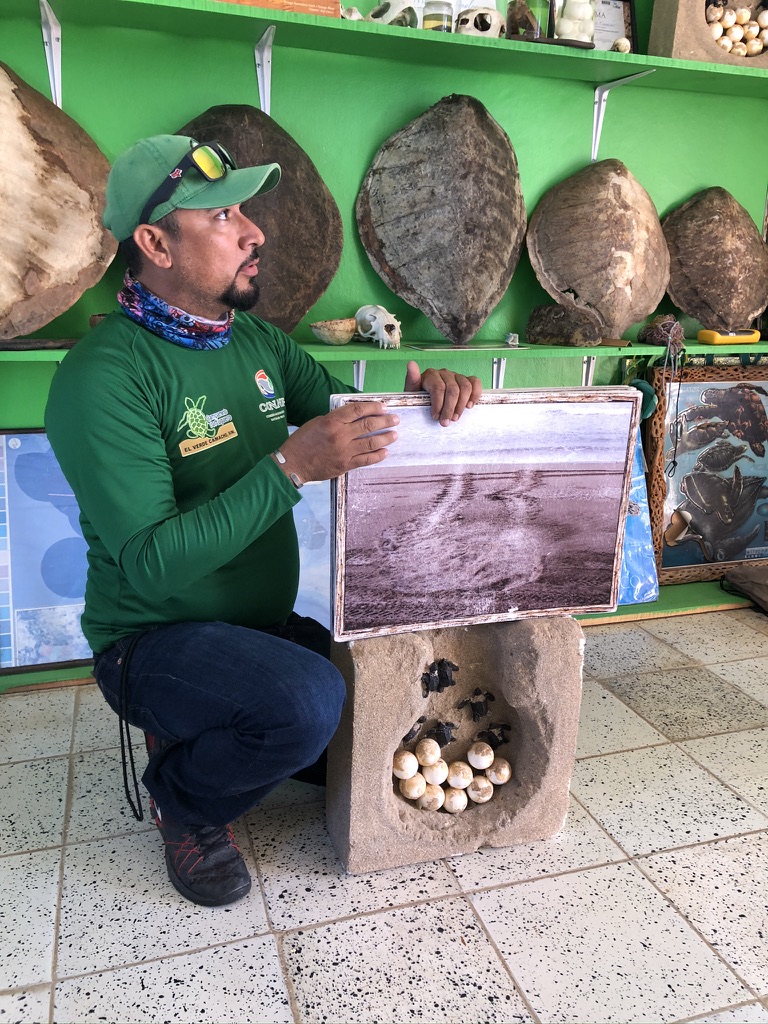
Between the director’s explanations in Spanish and the tour guide’s English interpretation, we were presented a clear picture of the danger of extinction for the turtles and how Mexico’s many sanctuaries work to help them survive. The director has 12 people working throughout the season to patrol the beaches to provide safe nesting for the turtles, collecting the eggs and providing ideal temperature control for them to hatch, and then releasing them back into the ocean once they have hatched. While nests in the wild may only have about 35% of the eggs hatch, they can obtain over 90% hatching rates with the incubators, which allows a much larger number to be released to the wild. Unfortunately still only 1 to 2% of the released baby turtles will survive to adulthood. The sanctuary provides free tours to Mexican schoolchildren so they learn the turtles’ value, and hopefully future generations will not hunt them or dig up their eggs for food. Our turtle tour fees went to help fund the sanctuary.
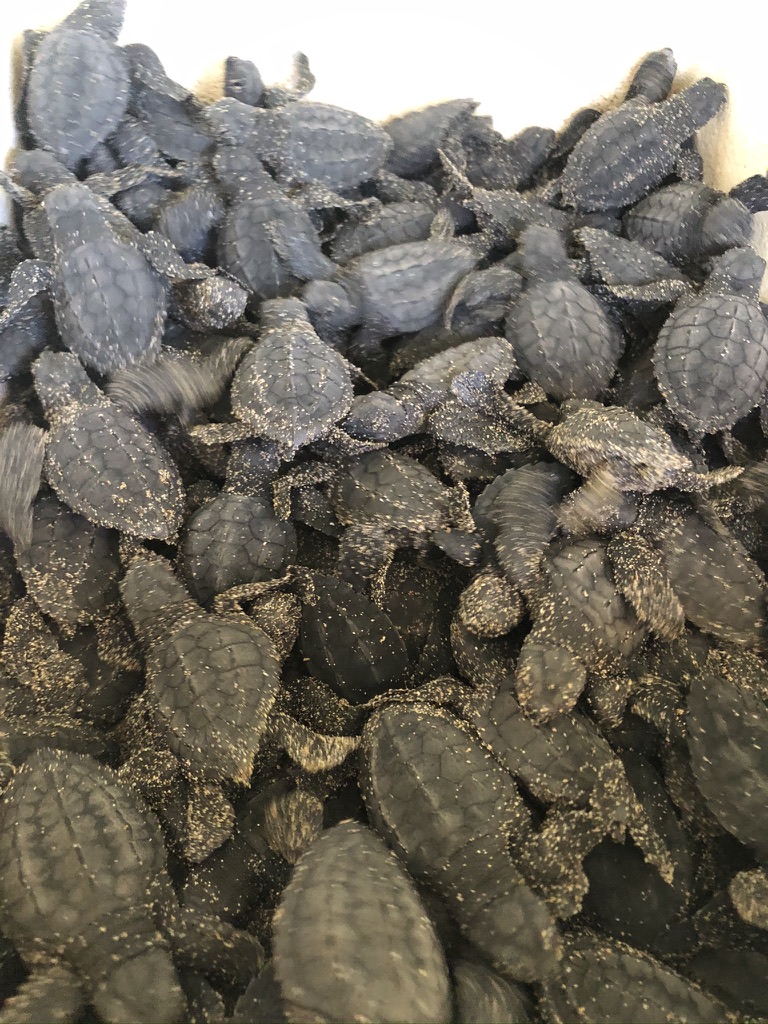
While it was all very interesting, the best part was being able to release our own little turtles into the ocean. They drew a line on the sand and we let our turtles out on the other side of the line. As they determined which way they needed to go and moved towards the ocean, staff drew the line out further and we moved closer to the ocean. It was important that we not contaminate the sand between the turtles and the ocean as the turtles needed to identify with and remember the sand so any females in the group knew where to return to lay their eggs. The males do not return, but there is no way to know whether the baby turtle is a female or male.
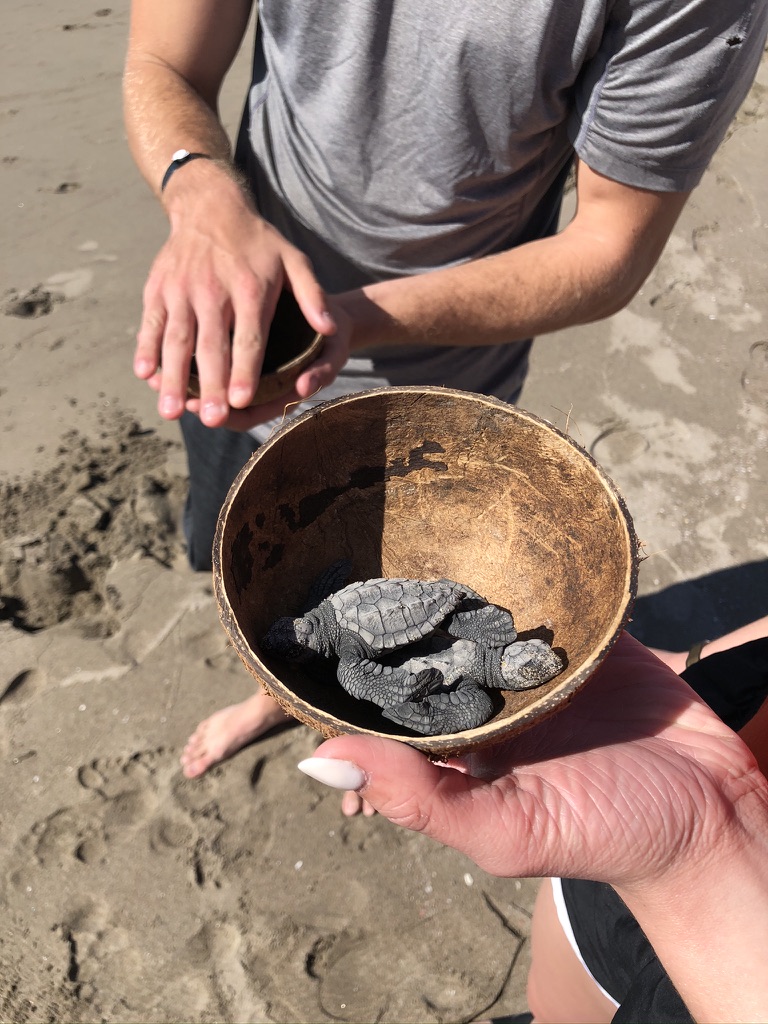
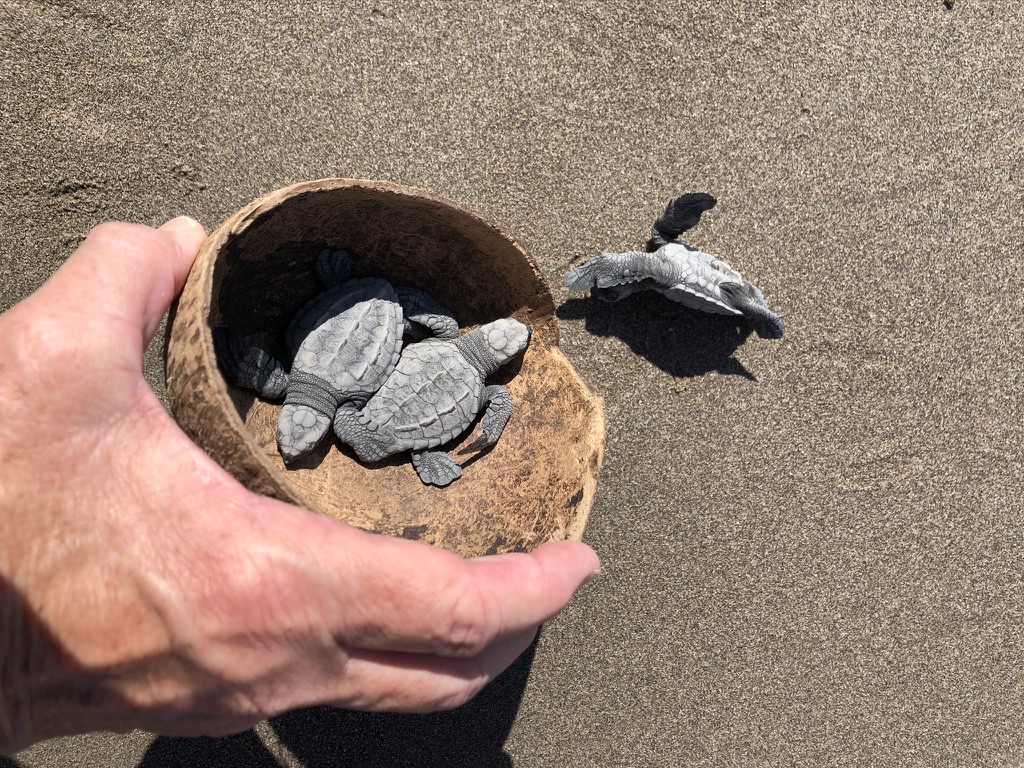
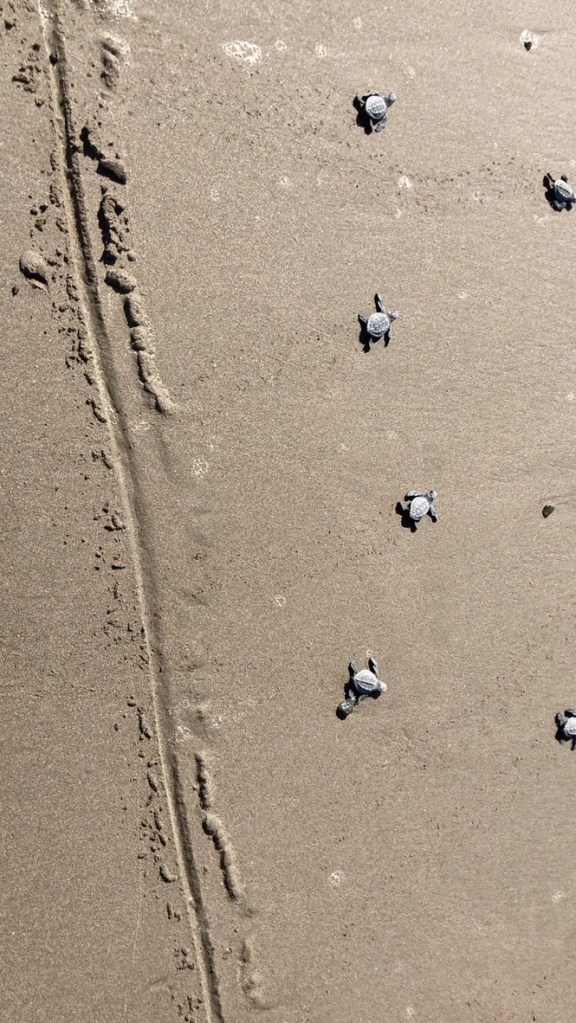
Thank goodness there were no predator birds on the beach as our twenty some turtles made progress towards the ocean. We had been told that frigates were the worst, and if present, one bird could devour our entire batch, not something we wanted to observe. Some turtles moved slowly and carefully, as others rushed towards the water. Once they hatch, they have enough nutrients in their body to live for three days without eating. However, they need to be in the ocean with access to food prior to that time, which is why new hatchlings are released daily. Ashlynn claims one of her releases was the first into the water, while we all agreed that Grandpa Terry’s were the slowest and the last to finally get to the waves. Once they were in the water, we could still see their little heads poking up above the waves for a while. They cannot swim underwater, so still have to come up for air. We stood on the shore and watched until every one of them was out of sight, and in our minds, safe.
 Grandma's Travels and Thoughts